
Specter
Private agent payments using zero-knowledge proofs. The counterparty can verify the payment is authorised and within policy, without ever seeing the amount.
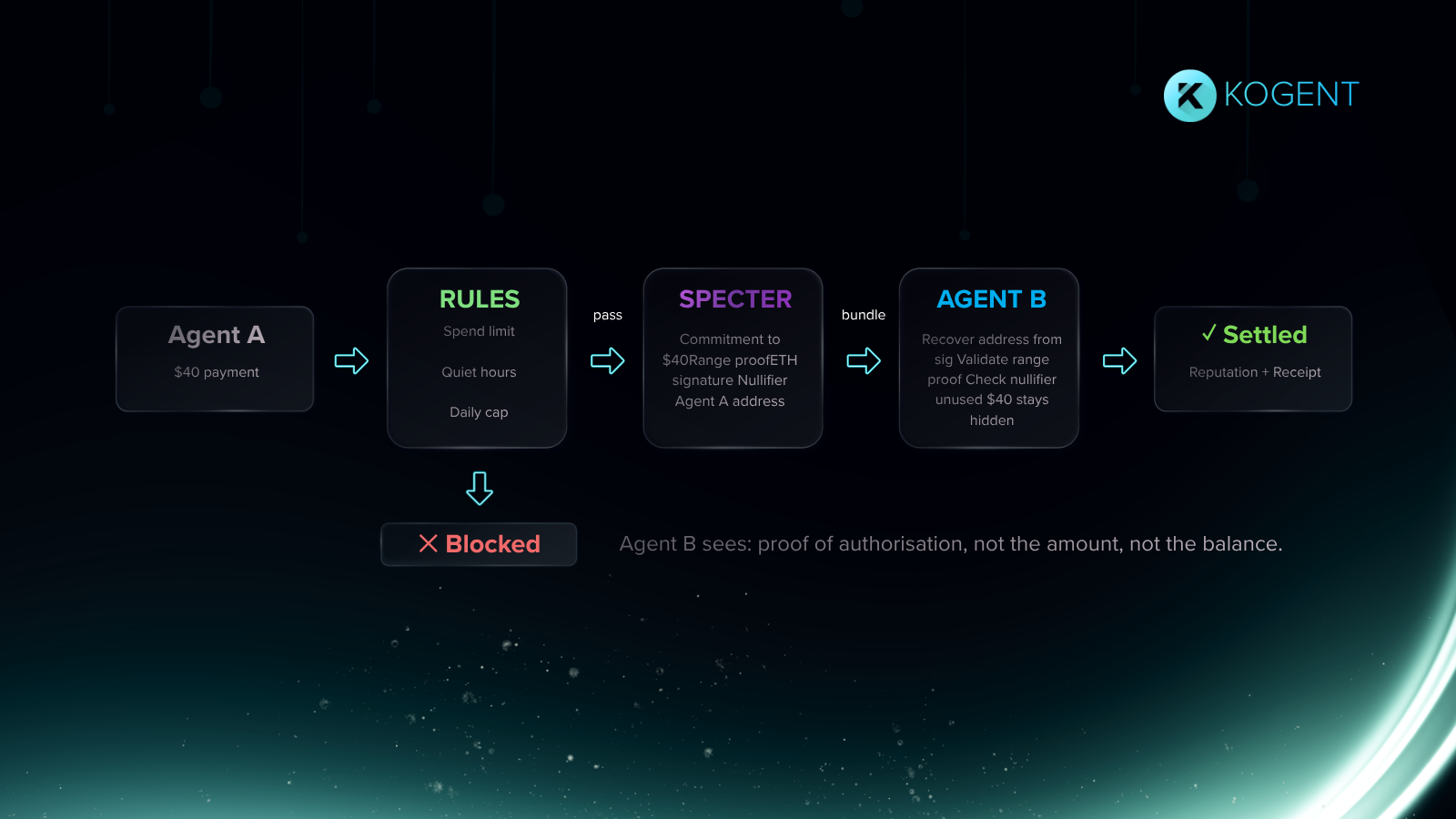
What it does
- Generates a Pedersen commitment to the payment amount (cryptographic proof of a value without revealing it)
- Produces a range proof showing the amount is within policy limits
- Signs the authorisation with the agent's ETH keypair
- Issues a nullifier to prevent the same authorisation being used twice
- Allows counterparties to verify solvency without learning the balance or amount
Why payment privacy matters
When an agent authorises payments, the transaction record reveals amount, frequency, and patterns. Over time, counterparties and observers can infer spending behaviour, budget constraints, and operational details. Specter removes that surface area: the proof of authorisation contains no amount information.
How it works with Rules
Specter and Rules work together on every payment. Rules checks the spend limit before the action runs. Specter generates the ZK commitment and range proof to enforce that limit cryptographically. The counterparty sees a proof that the payment is within bounds, not the bound itself, and not the amount.
Phase 2: address privacy
The current version hides the amount. Phase 2 will hide the payer address as well, using a shielded address scheme. Neither the amount nor the identity of the payer will be visible to the processor.